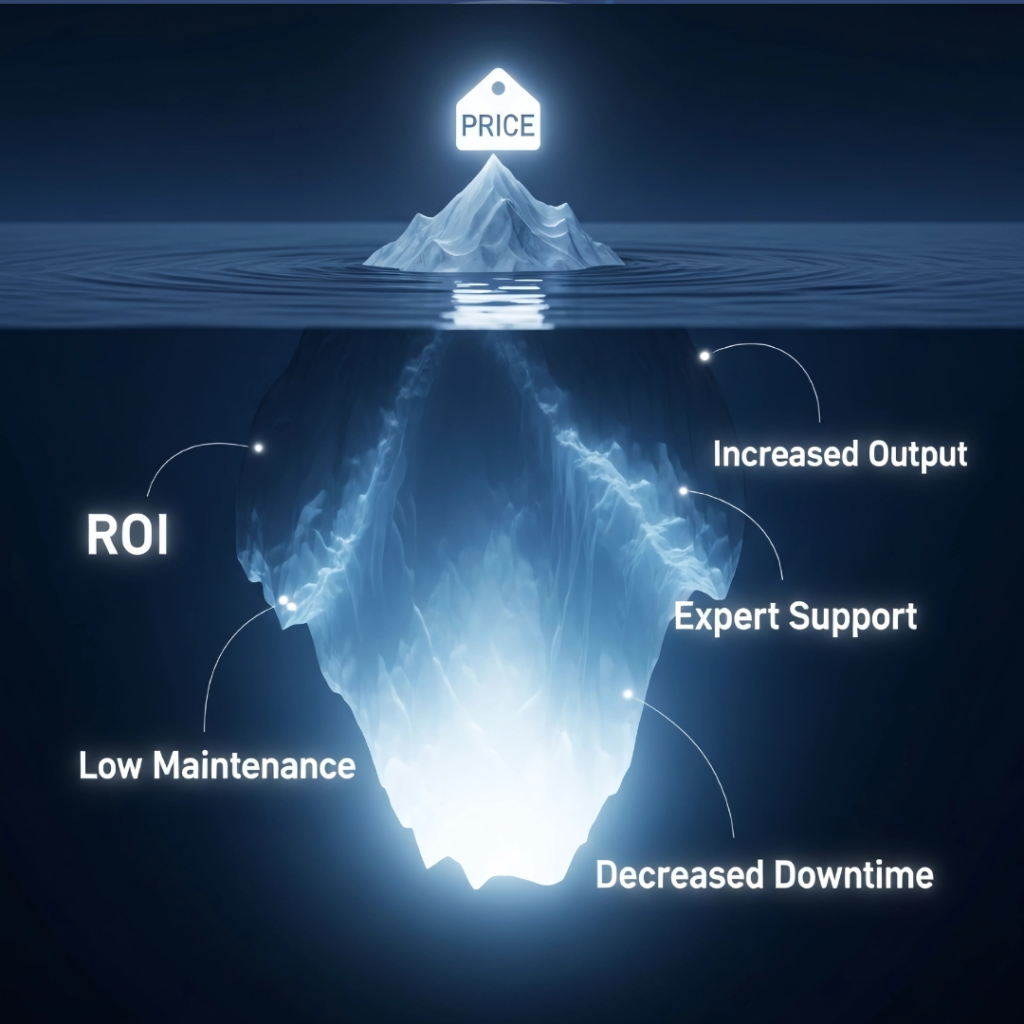
Mastering B2B Sales: How to Win the Order When Your Product is Not the Cheapest
In the highly competitive world of B2B industrial equipment, a common and often losing game is competing on price. For companies selling high-end or expensive products, falling into the trap of a price-driven conversation is a significant pain point. It positions your advanced machinery, automation systems, or specialized components as a commodity, making it vulnerable to a cheaper, albeit less effective, alternative. True sales mastery lies in confidently and strategically shifting the conversation from a focus on cost to a focus on undeniable, long-term value.
Winning an order for a premium-priced product is not about justifying the cost; it’s about making the customer understand the value of a comprehensive solution. This approach transforms the purchasing decision from a simple financial comparison to a strategic investment in their own business’s future.
The Value-First Blueprint for Winning Against Price

Avoid Talking Price First
The most critical rule in selling on value is to build your case for worth before ever mentioning the cost. The sales professional’s primary objective is to make the customer’s problem so tangible, and the proposed solution so compelling, that the price becomes a secondary, and often justifiable, consideration.

Uncover and Quantify the Cost of the Problem (and the Full TCO)
Shift the dialogue from a discussion about your product to a deep dive into the client’s operational pain points. What is the real cost of their current inefficiencies, downtime, or safety risks? This is where you introduce the concept of Total Cost of Ownership (TCO), which is a long-term metric that includes not just the initial purchase price, but all associated costs over a product’s entire lifecycle, such as operational costs, maintenance, and disposal. By helping the customer see the true TCO of their problem, you make the investment in your solution seem small by comparison.

Prove the Return on Investment (ROI)
This is the core of solution selling for high-end products. A high price tag is a strategic investment. The sales engineer must be able to clearly demonstrate how the product’s superior performance, longer lifespan, or increased efficiency will lead to a clear, measurable return on investment over time. This could be a 15% increase in output, a 30% reduction in energy costs, or a projected payback period of two years. This turns the price from an expense into a powerful financial benefit.

Highlight Differentiated Value Beyond Features
A competitor’s product might have a similar feature set, but what makes your solution uniquely valuable? This is where a sales engineer’s expertise shines. Is it your superior technology that offers unmatched reliability? Your integrated systems that provide seamless functionality? Your dedicated after-sales service and support that guarantees minimal downtime? This is the point at which you sell the entire value proposition of your product and company.

Build Trust as a Strategic Partner
When a customer is making a significant investment, they need to trust the partner they are working with. The sales engineer’s role is not to be a pushy salesperson but a trusted technical advisor who is genuinely invested in the client’s long-term success. By demonstrating honesty, deep industry knowledge, and a commitment to providing a true solution, you build a relationship that often outweighs the appeal of a cheaper alternative from a less-trusted vendor.
By mastering this value-first approach, sales professionals can confidently navigate price objections and win orders by proving that their solution, while not the cheapest, is undeniably the most valuable strategic choice.