Mastering the Art of Conversation: How to Tailor Your Pitch to Every Stakeholder
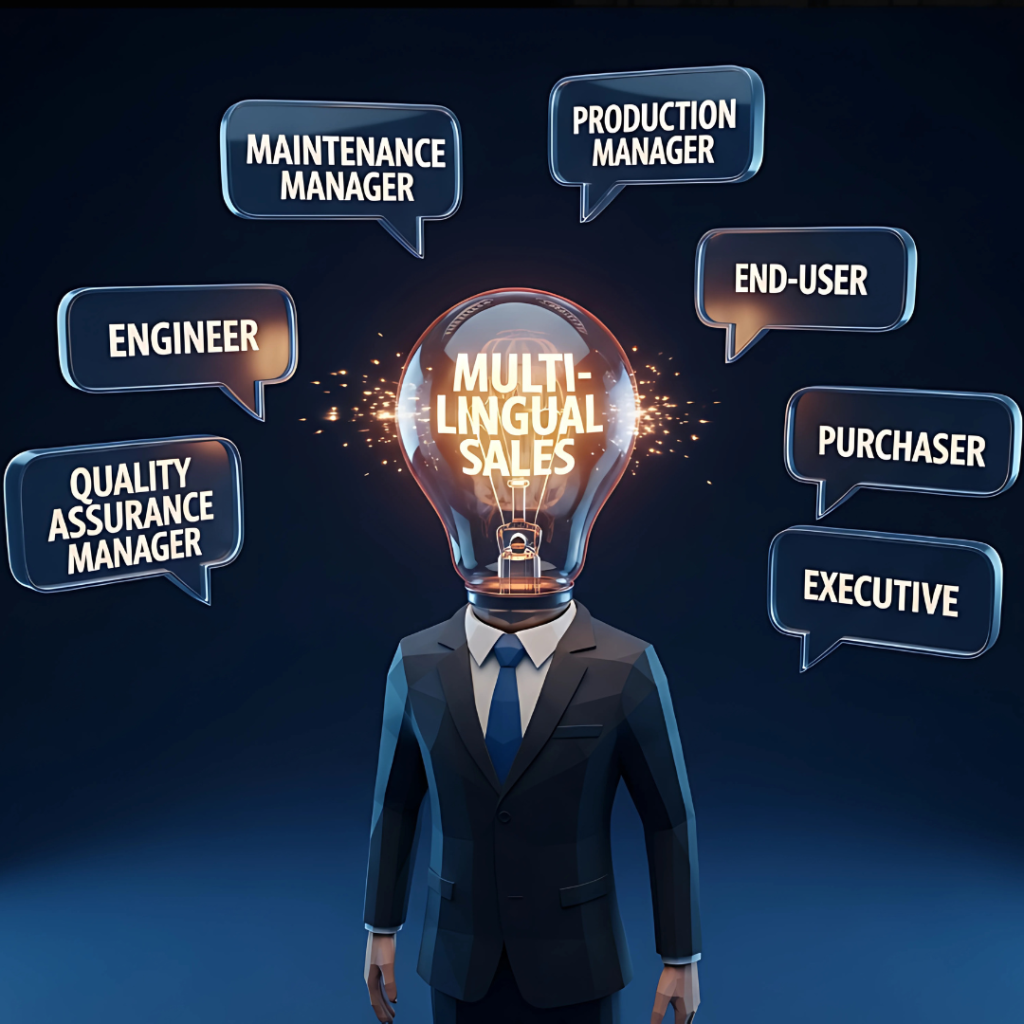
In the world of B2B industrial equipment, a sales professional rarely sells to a single person. Instead, they navigate a buying committee with diverse roles—from the production floor to the procurement office. Each stakeholder has a different priority, a different perspective, and, most importantly, a different “language.” A one-size-fits-all sales pitch that focuses on a single aspect of a product will, at best, be ineffective and, at worst, alienate key decision-makers. True sales mastery lies in the ability to understand these distinct languages and tailor your conversation to what matters most to each person in the room.
This strategic approach transforms a sales call into a series of highly targeted, problem-solving conversations. It shows that you’re not just a salesperson; you are an expert who understands the entire ecosystem of your client’s business.
The Multi-Lingual Sales Blueprint

For the Maintenance Manager: Talk Practicality & Uptime
Your conversation with a maintenance professional should focus on what they care about most: reliability and efficiency. Avoid high-level talk about ROI. Instead, speak their language:
Maintenance: Discuss how the equipment is easy to dismantle and assemble for servicing.
Uptime: Explain how fast and easy it is to perform routine maintenance, which directly reduces downtime.
Ease of Use: Highlight user-friendly interfaces and robust design that minimizes the chance of failure.

For the Production Manager: Talk Output & Efficiency
The production manager’s world revolves around getting the job done on time, within budget, and to a high standard. Your pitch should focus on:
Productivity: Explain how the equipment will increase throughput, production speed, or overall output.
Quality: Discuss how the solution will reduce waste, errors, or defects, leading to a higher-quality end product.
Operational Flow: Detail how the equipment integrates smoothly into the existing production line, avoiding bottlenecks or disruptions.

For the End-User: Talk Usability & Performance
These are the individuals who will work with the product or service on a daily basis. Their needs and feedback are crucial. Your pitch should focus on the practical application and day-to-day experience:
Ease of Use: Highlight user-friendly interfaces, intuitive controls, and features that make their job easier and more comfortable.
Performance: Discuss how the product will directly improve their daily tasks, such as increased speed, greater accuracy, or enhanced safety.
Training & Support: Explain the availability of training and support to ensure a smooth transition and confident use of the new equipment.

For the Purchaser/Procurement Manager: Talk Cost & Value
The purchaser’s primary focus is on the bottom line. You must speak their language of total cost of ownership (TCO) and supplier reliability. Go beyond the initial price and discuss long-term value:
TCO: Explain how TCO accounts for all costs associated with a product over its entire lifecycle, including maintenance, repairs, and energy.
Supplier Trust: Highlight your company’s reliability, consistent support, and clear warranties, all of which mitigate risk for their organization.

For the Executive/C-Suite Stakeholder: Talk ROI & Strategy
The executive’s language is strategic. They are interested in how an investment will affect profitability and the company’s long-term position in the market.
ROI: Focus on the profitability or financial gain of the investment relative to its cost. Emphasize how your solution generates a measurable monetary return.
Strategic Impact: Frame the solution as a strategic asset that provides a competitive advantage, drives market growth, or aligns with the company’s broader business goals.

For the Quality Assurance (QA) Manager: Talk Compliance & Standards
The QA manager’s primary concern is ensuring the product meets all internal and external standards. Your pitch should focus on:
Compliance: Explain how your equipment adheres to specific industry standards, safety certifications, and regulatory requirements.
Quality Control: Discuss the built-in quality control features, such as sensors, automated checks, and data logging, that help them maintain a high level of quality.
Reliability: Highlight the precision and consistency of your product, which reduces defects and improves the overall quality of the end product.

For the Engineer/Technical Expert: Talk Specs & Integration
This is where you can build credibility by demonstrating your own technical acumen. The engineer’s language is one of precision:
Specifications: Discuss technical features, performance metrics, and the underlying technology with confidence and detail.
Integration: Explain how the equipment will integrate with their existing systems, software, and industrial processes.
Customization: Be ready to discuss customization options, technical support, and the specific application of the product to their unique operational environment.
By mastering this “multi-lingual” approach, you transform every sales interaction from a generic pitch into a highly relevant, problem-solving conversation. This not only builds rapport with each individual but also demonstrates a holistic understanding of the client’s business, solidifying your role as an invaluable and trusted technical advisor.