Technical Sales Skills
Actionable strategies to translate engineering expertise into commercial success
In the world of B2B industrial equipment, the role of a Sales Engineer (SE) is paramount. You are the critical link between the innovative engineering and the customer’s operational reality. Success is no longer about simply knowing the product specifications; it’s about deeply understanding the customer’s business, diagnosing their challenges, and architecting solutions that deliver measurable impact. This guide outlines the core competencies that elevate an SE from a product expert to a strategic business partner.
Master the Discovery: Uncover the Real Problem
Stop presenting solutions prematurely. Your primary goal in the initial stages is not to sell, but to diagnose. Customers often describe symptoms, not the root cause. A superior technical discovery uncovers the operational and financial pain points, making your solution an obvious necessity, not just another option.
Key Takeaways:
Ask “Why” Repeatedly: Go beyond the surface-level request. Use root cause analysis techniques to understand the core operational challenge.
Map Their Process: Understand their entire workflow, not just the part your product touches. Identify bottlenecks, inefficiencies, and hidden costs.
Quantify the Pain: Attach numbers to the problem. What does the issue cost them in downtime, wasted material, labor hours, or missed opportunities? A problem with a price tag gets solved.
Listen 80/20: In discovery, you should listen 80% of the time and talk 20%. The customer will give you everything you need to build the business case.
Translate Features into Financial Value
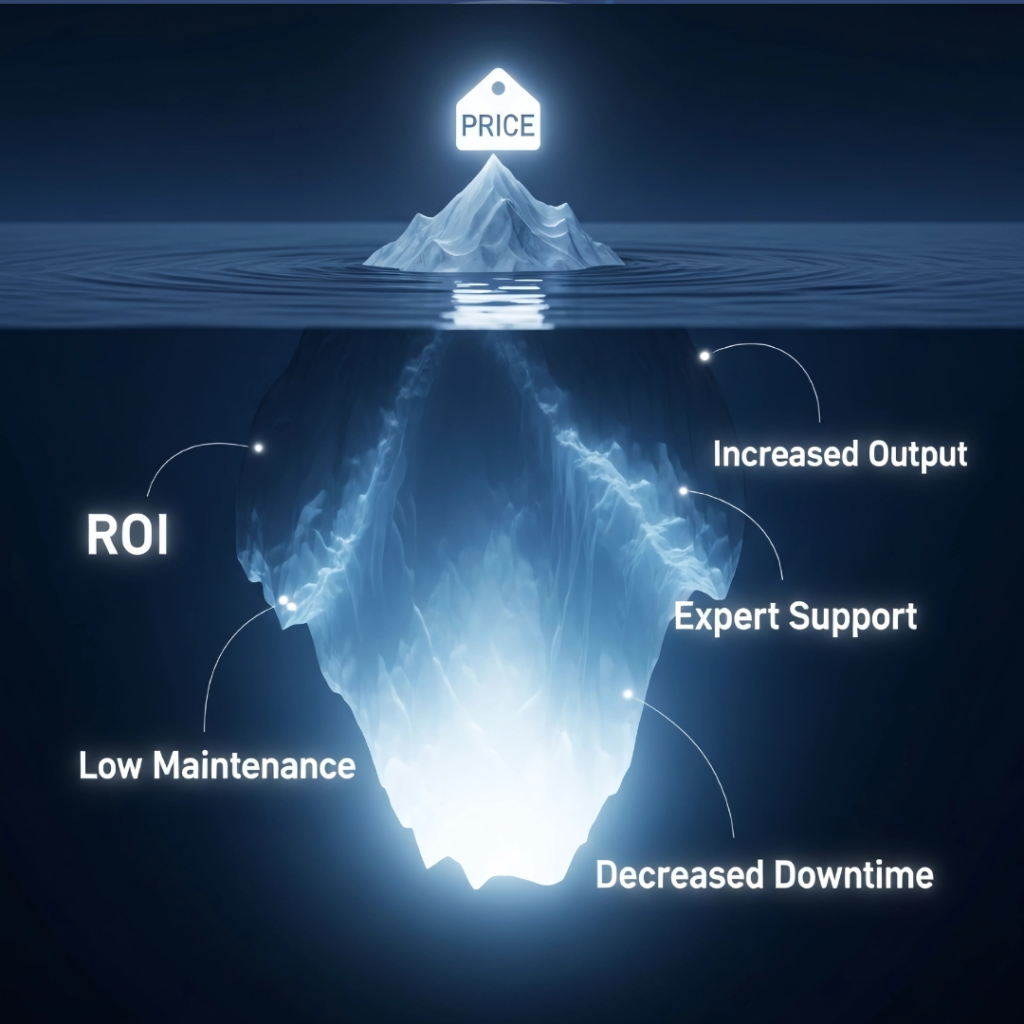
Decision-makers, especially non-technical stakeholders, do not buy features; they buy business outcomes. Your ability to connect your product’s technical specifications to metrics like Return on Investment (ROI), Total Cost of Ownership (TCO), and productivity gains is what separates you from the competition.
Key Takeaways:
Apply the “So What?” Test: For every technical feature, ask “So what?”. The answer should always be a clear, tangible benefit for the customer’s business (e.g., “Our higher-grade alloy so what? leads to 15% longer component life, reducing annual replacement costs.”).
Speak the Language of Business: Frame your solution around concepts like payback period, operational efficiency, risk reduction, and competitive advantage.
Build a Simple Business Case: Use the customer’s own numbers to show a clear financial projection. Even a basic spreadsheet showing their costs now versus their costs with your solution is incredibly powerful.
Use Proof, Not Promises: Support your business case with relevant case studies, performance data, and pilot project results.
Navigate Technical Objections with Confidence
Objections are not rejections; they are requests for more information. A technical objection is an opportunity to demonstrate your deep expertise, build credibility, and address the customer’s underlying fears. Handling them with structure and confidence turns a challenge into a turning point in the sale.
Key Takeaways:
Acknowledge, Clarify, Respond: Never be defensive. First, acknowledge the concern (“That’s a valid point.”). Second, clarify to ensure you understand (“When you mention implementation time, what is your primary concern?”). Only then, respond with a targeted answer.
Know Your Competition (and Yourself): Understand your competitors’ technical strengths and weaknesses, but always pivot back to the value your solution provides. Focus on your differentiators that matter most to this customer’s problem.
Admit What You Don’t Know: Saying “I don’t have the data on that right now, but I will get you an answer by Thursday” builds more trust than giving a weak or incorrect answer.
Isolate the Objection: Confirm if it’s the only remaining issue. (“If we can resolve this concern about integration, are you ready to move forward?”).
Build Lasting Credibility: Become the Trusted Advisor
In long industrial sales cycles, trust is more valuable than any single feature. Customers buy from experts they trust to solve their problems, not just sell them a product. Your goal is to transition from a vendor to an indispensable partner whose advice they seek and value.
Key Takeaways:
Under-Promise, Over-Deliver: Be realistic and conservative in your claims and timelines. Then, exceed those expectations. This is the fastest way to build a reputation for reliability.
Be Honest About Limitations: No product is perfect for every application. Proactively identifying where your solution might not be a good fit shows integrity and builds immense long-term trust.
Share Industry Knowledge Freely: Provide value beyond your product. Share relevant industry trends, best practices, or articles. Become a resource for them, not just a salesperson.
Document and Follow Up: Every promise, action item, or technical question should be documented and followed up on meticulously. This demonstrates professionalism and respect for the customer’s time.
Related Resources
Further reading to sharpen your technical sales and engineering skills.
Mastering the Art of Conversation: How to Tailor Your Pitch to Every Stakeholder In the
Mastering Value: How to Win the Deal When the Initial Cost is Too High In
Mastering B2B Sales: How to Win the Order When Your Product is Not the Cheapest
Beyond Guesswork: The Strategic Advantage of Honest Deferral in B2B Interactions In the high-stakes world
Cultivating Confidence: How to Transform from Salesperson to Indispensable Problem-Solver In the intricate world of
Beyond Over-Promising: Building Trust and Long-Term Value in Industrial Sales In the complex world of